Pause carousel
Play carousel

More than 50 aspiring game developers gathered at Abertay University at the weekend for a game jam focused on creating video games for blind and partially sighted players.
Delivered in partnership with mobile games company Scopely and national sight loss charity RNIB, the event challenged participants to put accessibility at the heart of game design from day one.
Game jams are intensive events where developers work in teams to design and build a playable game within a fixed timeframe. Over the weekend of 16-18 October, students and developers had 48 hours to create original games while considering the needs of blind and partially sighted players throughout the development process.
Organised by the University's Competitive Games Lab and Human-Centred Emerging Technologies Lab, the event brought together students, researchers and RNIB volunteers to explore how inclusive design principles can help make games accessible to a wider audience.

Dr Lynsay Shepherd, Reader in Cybersecurity and Human-Computer Interaction, said:
The Human-Centred Emerging Technologies Lab focuses on how people experience and interact with technology, and this game jam is a valuable opportunity to translate its research into practice. By challenging students to design games for blind and partially sighted players from the outset, we're helping future game developers understand that accessibility should not be an afterthought. It's fundamental to creating inclusive, well-made games.
Dr William Kavanagh, Competitive Games Lab Lead, said:
Our lab's mission is to widen access to competitive games, a space that has traditionally presented significant barriers for players with sight loss. We are actively undertaking this research with our collaborators at RNIB, and being able to invite our students to take part alongside us is fantastic. Working directly with RNIB volunteers gives students first-hand experience of inclusive design, equipping them with practical skills before they go on to build a more accessible games sector.
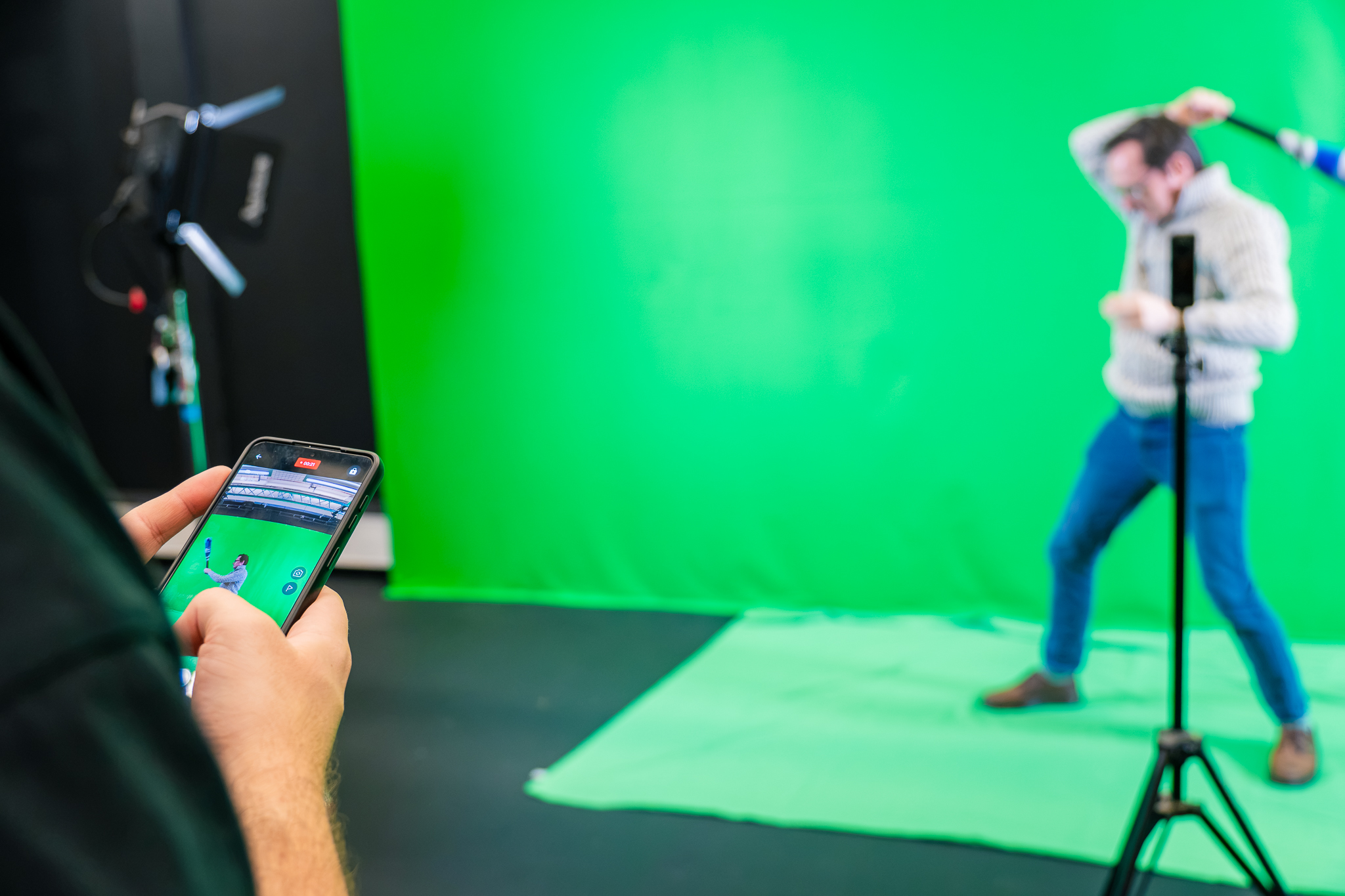
Throughout the weekend, blind and partially sighted RNIB volunteers joined the developers to playtest early builds, share feedback in real time, and advise teams on designing for players with sight loss.
RNIB Scotland's James Kyle said:
It is best practice to design a video game to be accessible from the start of development, as it’s much easier to add accessibility features at this stage than it is once the game is near complete. By involving disabled people at this stage in the design of your video game, you can be more confident that your solutions to overcoming accessibility barriers will meet the needs of the wider disabled gaming community. Our blind and partially sighted gamers have been able to provide real-time feedback to the designers this weekend, helping ensure that the games being developed have accessibility at the forefront.
RNIB research has found that 76 per cent of gamers with sight loss say their ability to play video games is significantly affected by their sight condition, while only 15 per cent of game developers surveyed feel they have sufficient understanding of the needs of blind and partially sighted players.
Over the weekend, teams produced a diverse range of accessible games, including co-operative adventures, puzzle games, interactive fiction, horror experiences and fantasy quests. Across the projects, teams experimented with audio narration, text-to-speech, haptic feedback, sensory exploration and collaborative play.
The winning game, Sixth Sense, challenges two players to work together to escape, with one player able to see the environment and the other relying entirely on directional audio and their teammate's guidance. Success depends on communication, trust and teamwork.

The event was sponsored by Scopely, the mobile games company behind titles including Monopoly Go!, Stumble Guys, and Star Trek Fleet Command. Scopely has development teams across the globe, including Dundee where the event took place.
The jam builds on a long-running focus on accessible gaming from Abertay and RNIB, including a toolkit published last year to help games studios make extended reality (VR, AR and mixed reality) experiences more accessible for blind and partially sighted players. It also sits alongside RNIB's wider Design for Every Gamer initiative, which provides developers with practical guidance- from audio cues to scalable, high-contrast UI- for building accessible games.