Pause carousel
Play carousel

Abertay University and The James Hutton Institute have partnered on a new online game that brings Scotland’s potato heritage to life while highlighting the importance of biodiversity and sustainable agriculture.
The project, Potato Expedition: 1946, was developed by students from Abertay’s Professional Masters in Games Development (MProf) programme in response to a live brief from The James Hutton Institute.
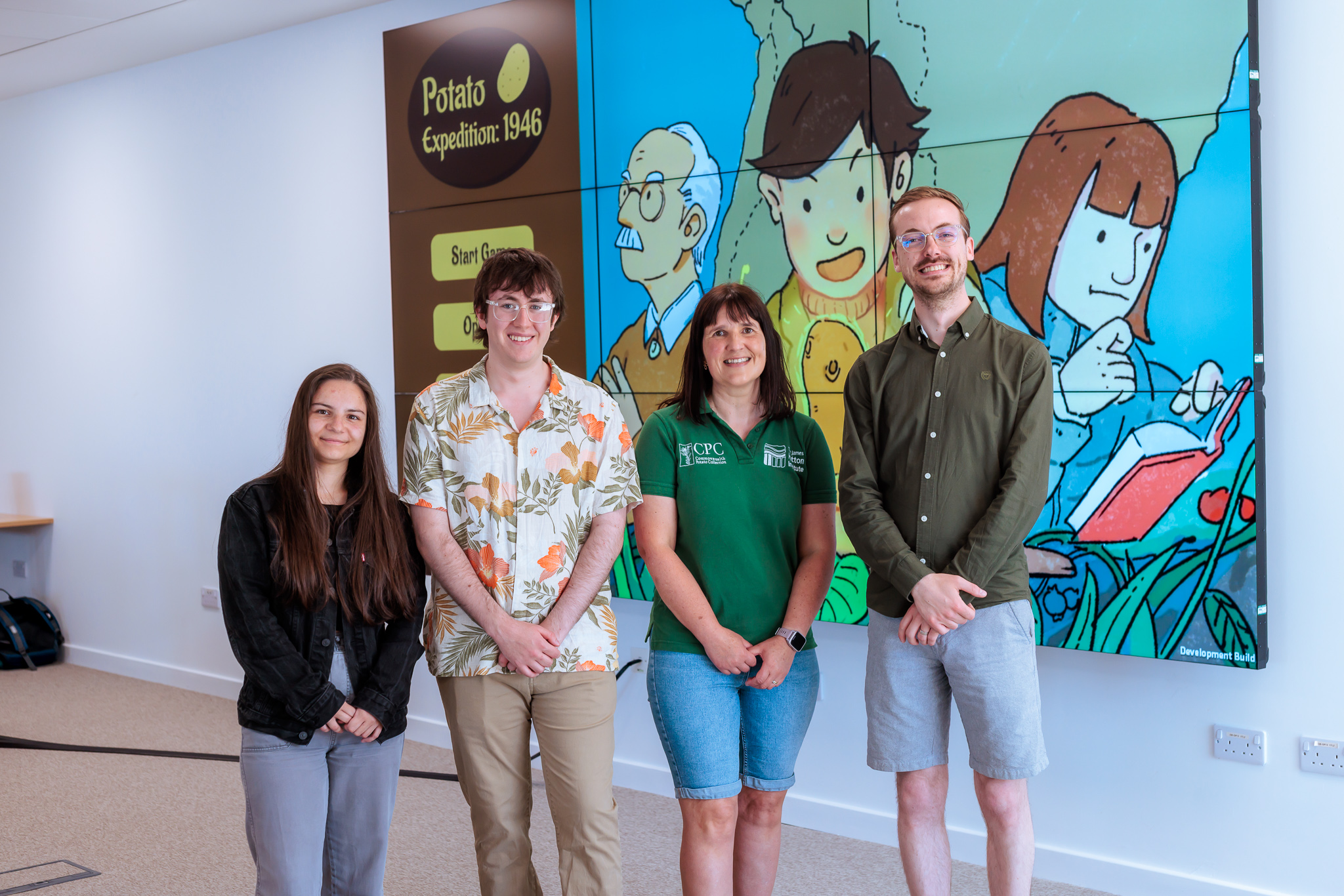
Working closely with researchers from the Hutton, the student team, Root Games, made up of George Campbell, Richeng Liu, Vera Silva, Sammy Tsai, Alfie Vaughan and Tianyu Wang - designed and built the game earlier this year as part of the DES511: Applied Games and Research Design module.
The game places players in the role of a plant collector travelling to South America to gather wild potato species. Their mission is to safely return 20 unique specimens to help establish the Commonwealth Potato Collection, a vital resource for breeding crops that can withstand disease and climate change.
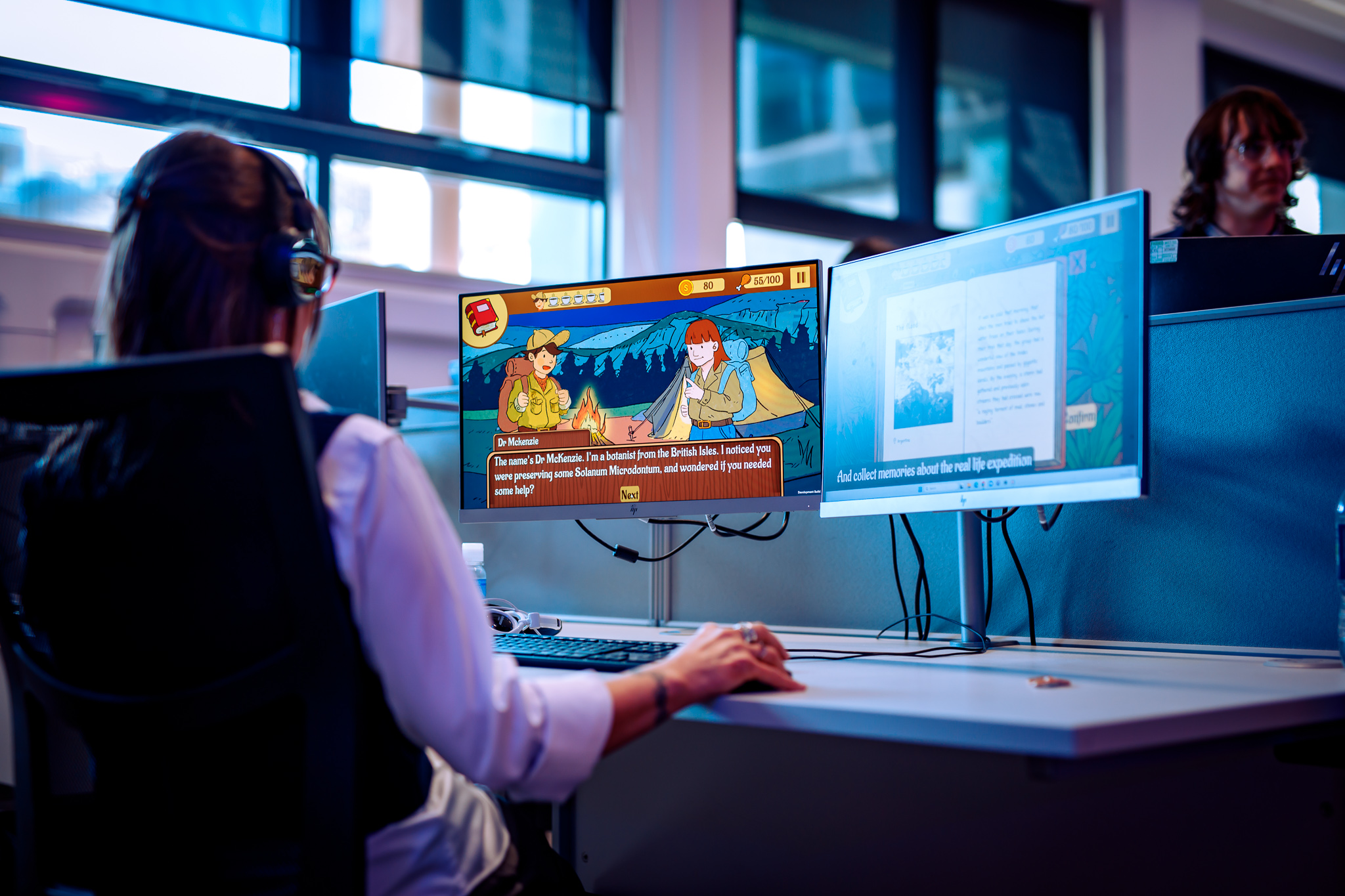
The Commonweath Potato Collection (CPC, held in trust by the Hutton, comprises around 1500 accessions (distinct samples of potato seeds that represent cultivars, breeding lines or populations, maintained for conservation and use in research and breeding) of about 80 wild and cultivated potato species, each of which can be traced back to a handful of berries or tubers from potato plants in south or central America. This gene bank protects future potato food security through genetic diversity.
Blending storytelling, strategy and puzzle-solving, players must manage limited resources, identify plant species and make decisions in unpredictable conditions. The game is designed to be accessible to a wide audience while sparking interest in biodiversity and the history of food crops.
Vera Silva, a member of Root Games, said:
Working with the James Hutton Institute on the game was an incredibly rewarding and enriching experience. One of the most fulfilling parts of the experience has been seeing children enjoy playing the game during the visiting school pupils session at Abertay, as well as at the Edinburgh Science Festival, where we were able to showcase the game in partnership with JHI. Watching the children become curious, engaged and connected with the ideas behind the project was really rewarding for the team and demonstrated the value and potential of games as educational tools. Although the development process was challenging at times, it was absolutely worthwhile, and I’m grateful for the opportunity to collaborate both creatively and professionally with JHI.
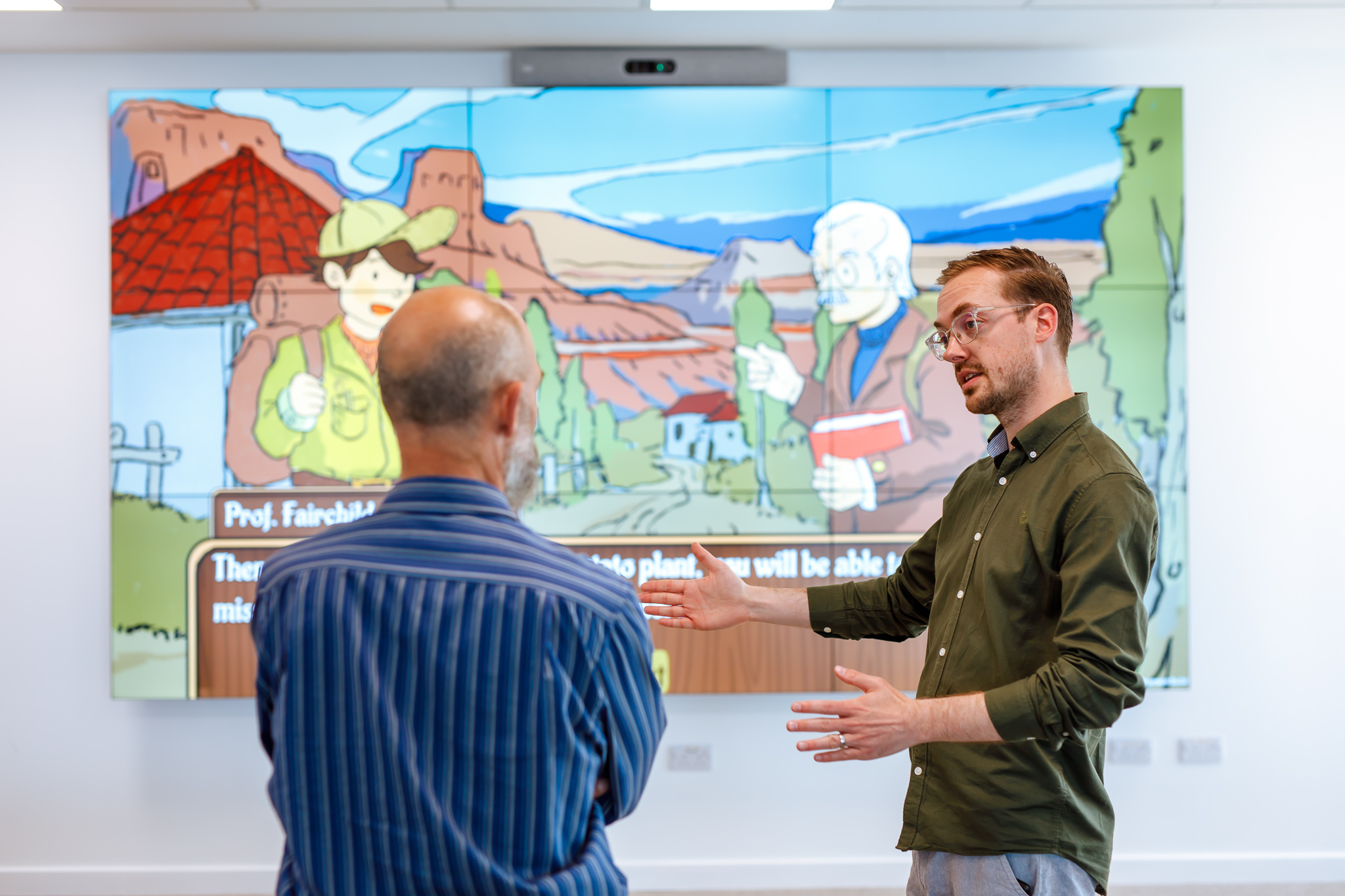
The project draws on the work of Professor John Gregory “Jack” Hawkes (1915–2007), whose research helped establish the Commonwealth Potato Collection. The James Hutton Institute hosts this nationally important collection, which includes potato species gathered in North and South America in 1938.
These genetic resources have the potential to support the development of new varieties resilient to changing climates and disease pressures. Students drew on archival materials, including expedition diaries, photographs and historical footage, to inform the game’s design and narrative.

Gaynor McKenzie, curator of the CPC, said:
Working with Abertay University Games Lab and its students has given our team the unique opportunity to highlight the importance of biodiversity and its preservation to a wide audience. Although this project was in an entirely different area of work for me, I greatly enjoyed collaborating with the students, whose enthusiasm, creativity, and professionalism were evident throughout. They delivered a final product that captured exactly what I had envisioned.
The game showcases the significance of the collection, explores its historical context, and offers an engaging introduction to the world of botany. By exploring innovative approaches to knowledge exchange, we have created an accessible and appealing resource designed to engage users across a broad demographic.
As well as being showcased at the Edinburgh Science Festival in April, the game was featured at Abertay’s annual Applied Games Showcase where MProf students present their projects.
Now in its second year, the event highlights “applied games” — designed for purposes beyond entertainment, such as education, training, research and healthcare — and provides industry partners with the opportunity to view work created in response to real-world briefs.
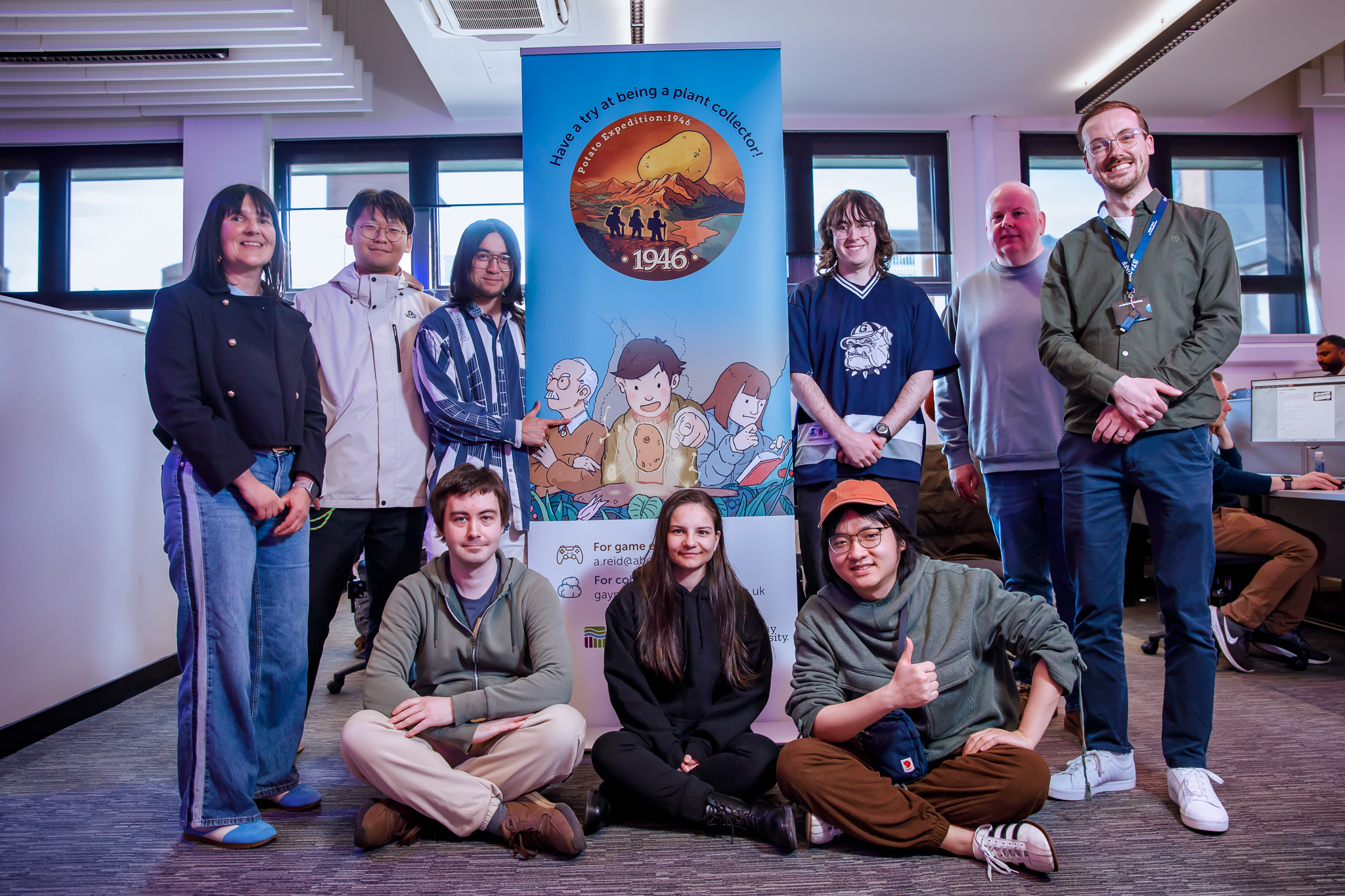
This year’s cohort tackled a wide range of topics, from exploring the lived experience of families affected by Huntington’s Disease and developing youth-led role-playing games, to engaging with Scotland’s design, heritage and architecture, and creating interactive experiences around personal safety and local history.
Dr Andrew Reid said:
One of the strengths of the Applied Games module is the opportunity for students to collaborate with external partners on meaningful, real-world projects. Working with The James Hutton Institute has allowed this team to explore how games can bring research to life and connect wider audiences with important topics such as food, farming and biodiversity. It’s been particularly rewarding to see how they’ve translated detailed historical and scientific material into an engaging, interactive experience that remains accessible to a broad audience while retaining its educational value.