Pause carousel
Play carousel

The Abertay Digital Graduate Show (ADGS) returns next week to mark 20 years of celebrating student talent at Abertay University, with this year’s exhibition bringing together the largest body of work ever showcased at the event.
Running from Thursday 14 May to Saturday 16 May, the exhibition will take place across two levels of the Kydd Building, home to Abertay’s National Centre for Excellence in Games Education.
Open to the public, the show invites industry professionals, students, families and visitors to explore, play and experience the future of digital creativity.
More than 180 student projects will be on display, spanning disciplines including concept art, character design, animation, applied games, programming, game design, UI/UX, 3D modelling, and virtual and augmented reality.
Spanning two floors of the National Centre for Excellence in Games Education, the exhibition offers an expanded and immersive experience where visitors can interact with playable demos, discover innovative ideas and meet the student creators behind the work.
Clare Brennan, lecturer in the Department of Games and Arts, said:
This year’s Abertay Digital Graduate Show will showcase some of the most impressive work our students have ever created. Now in its 20th year, the show has gone from strength to strength and has firmly established itself as one of Dundee’s biggest and most exciting creative events. Our students have produced an incredible variety of projects that reflect the breadth of technical, artistic and creative skills taught across our degree programmes—there really is something for everyone. I can’t wait to welcome the public to celebrate the dedication, originality and talent our students have poured into their final work, while also marking two decades of the Graduate Show.
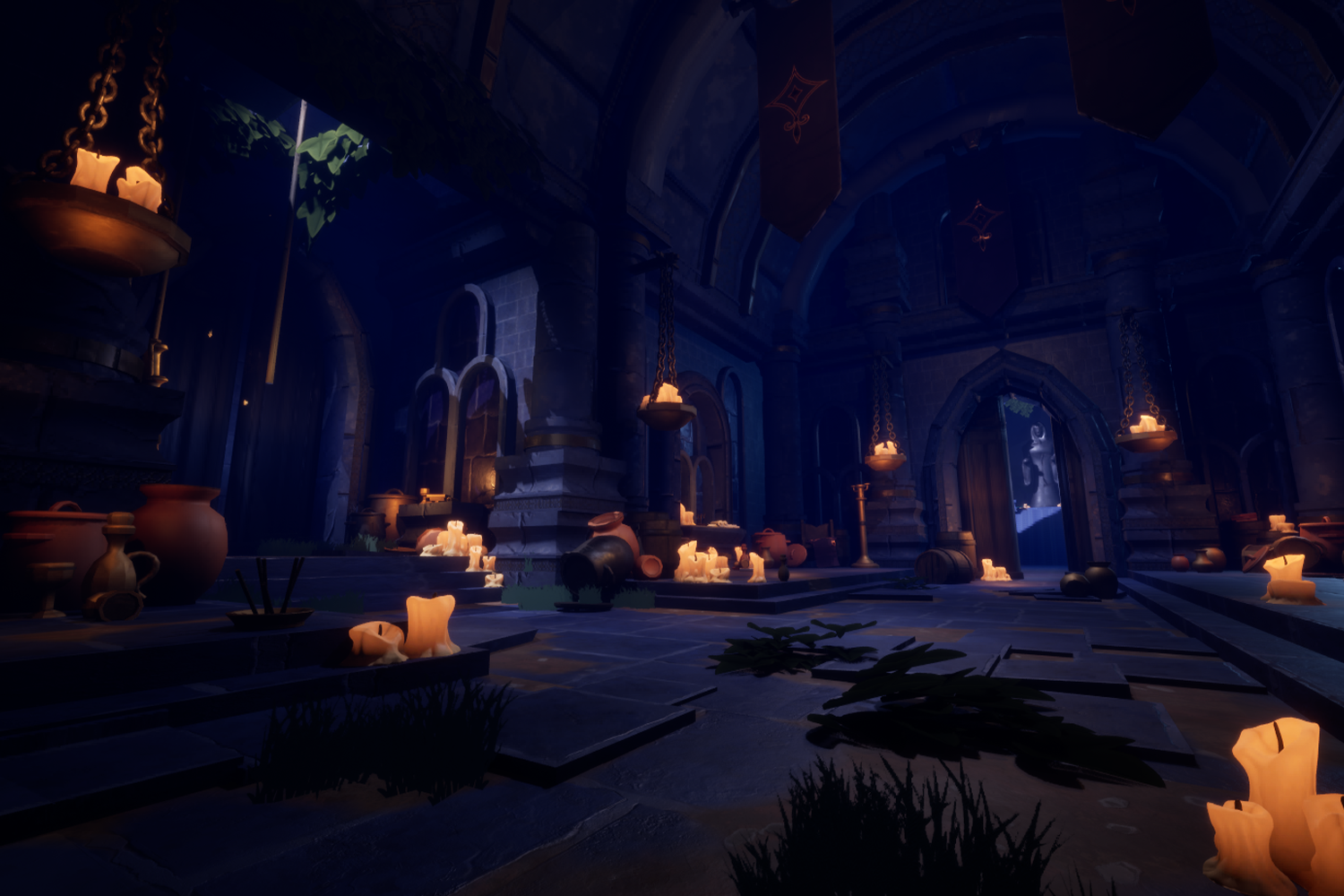
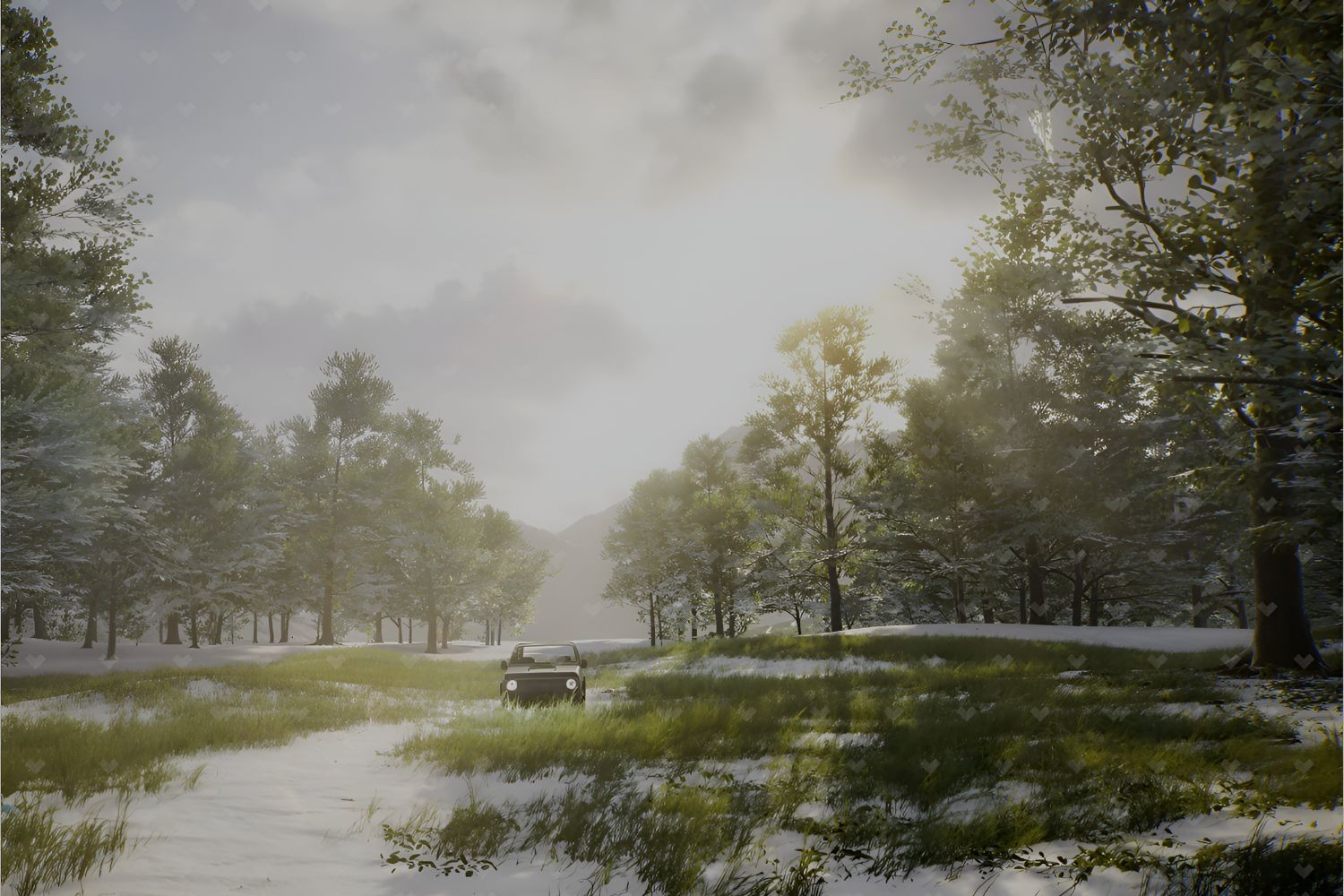
Moonlit Offering is a 3D environment that explores how immersive world-building can strengthen storytelling in open‑world games. The project showcases detailed environmental design while examining how professional 3D art pipelines are documented and applied within industry‑standard, real-time game engine workflows.
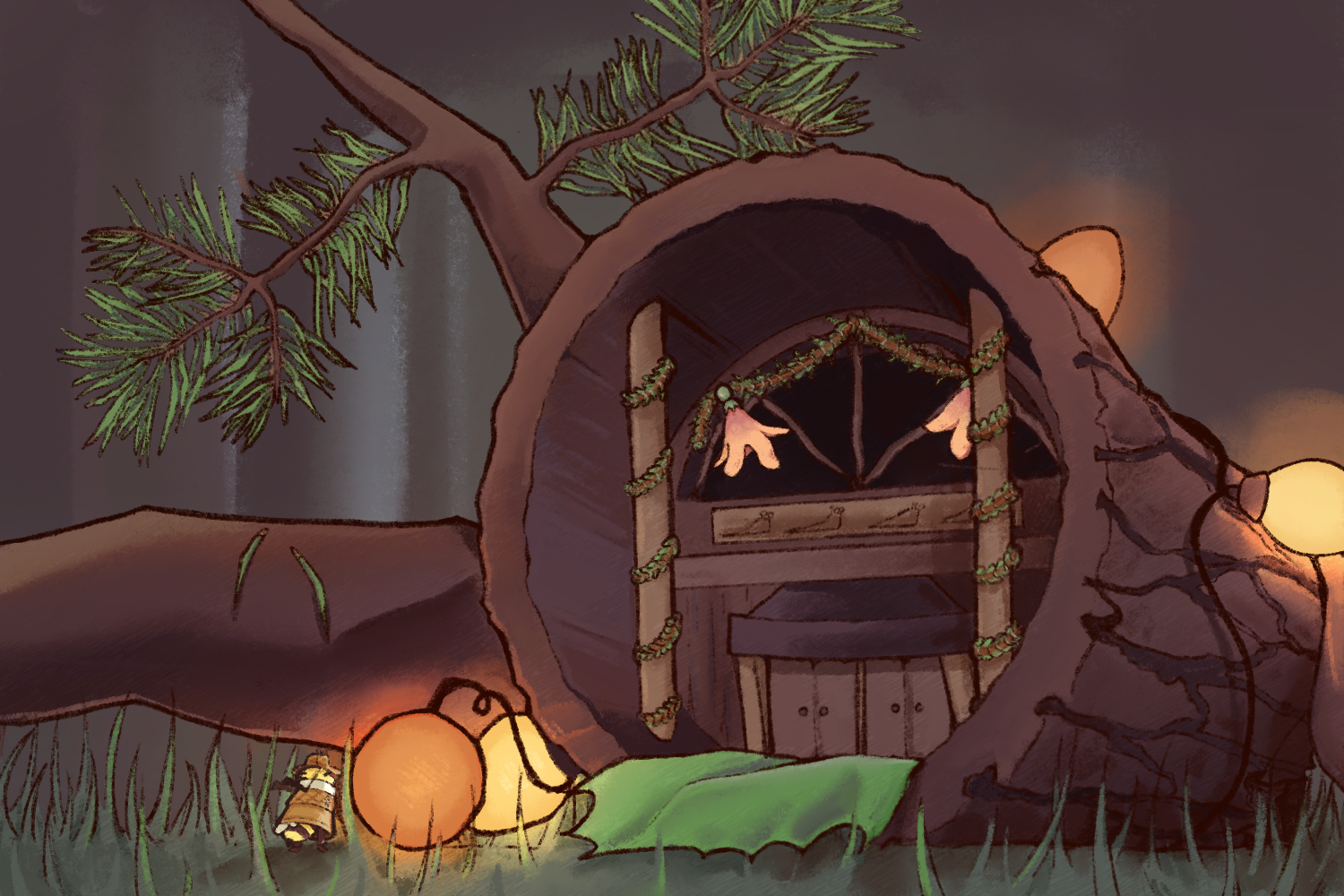
Set in a Victorian‑era Caledonian forest, Beetective is a short demo inspired by nature, folklore and period aesthetics. The project introduces a cast of fun, quirky woodland creatures and insects, all potential suspects in a mystery investigated by a lovable yet timid bee. Designed as a proof of concept, the demo showcases character concepts and artwork while laying the foundation for a charming new detective adventure.
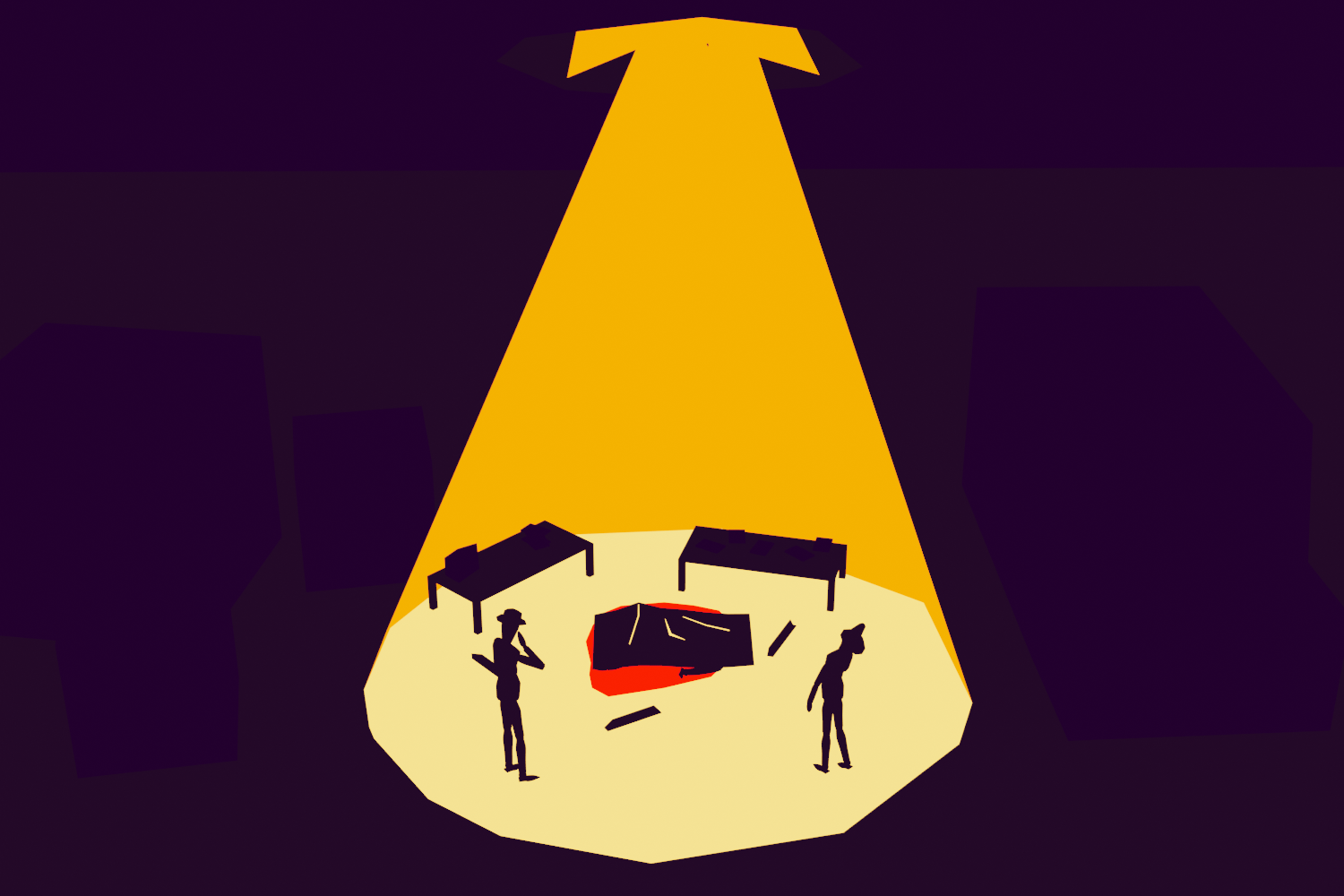
Jack (Of What?) Trades is a short, open‑ended game level designed to explore character creation, player expectations and misleading design. Set in a satirical parody of 1950s America, in the fictional city of Ninch, North‑West Carolina, players choose from a range of pre‑made archetypes and must think carefully about how they approach each challenge. While the game can be completed without engaging deeply with the narrative, players who take the time to uncover the truth behind their work are rewarded with additional layers of meaning and multiple hidden endings.
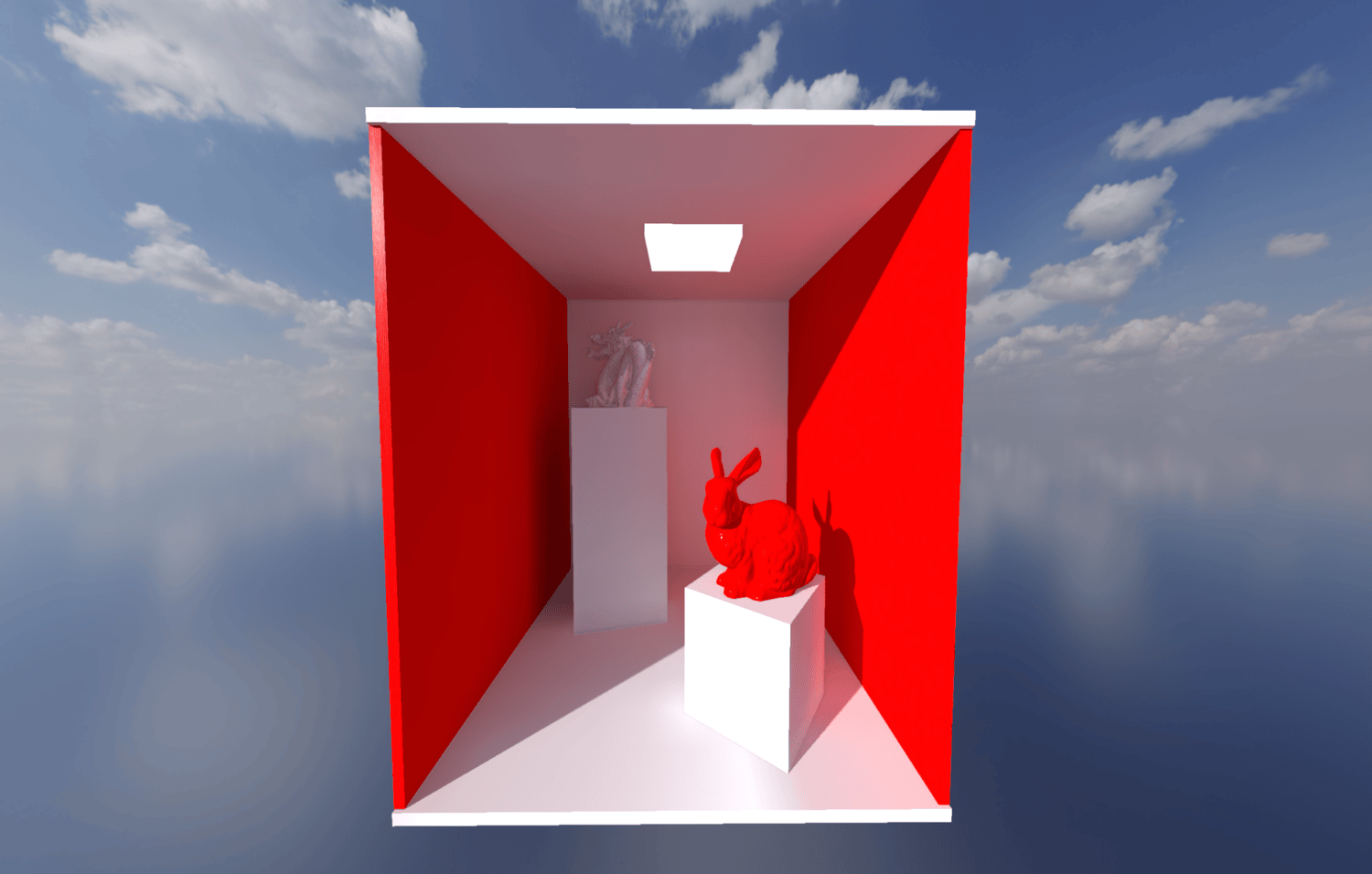
This project looks at how cutting‑edge graphics techniques can make game and real‑time visuals look more like high‑end CGI, without sacrificing performance. It explores ways to achieve realistic lighting at frame rates suitable for games and interactive experiences. By studying modern lighting systems like ReSTIR Direct Illumination and Dynamic Diffuse Global Illumination (DDGI), the project examines how different methods sample and calculate light, balancing visual quality with smooth performance.
This project explores how games can respond to a player’s emotions in real time. Built using Unreal Engine, the system uses facial‑tracking technology to detect emotional expressions and adapt the game world around them.
As a player’s mood changes, so does the experience — with lighting, sound, environments and particle effects shifting to match feelings such as happiness, sadness or fear. The result is a more personal, immersive experience that reacts to the player in the moment.
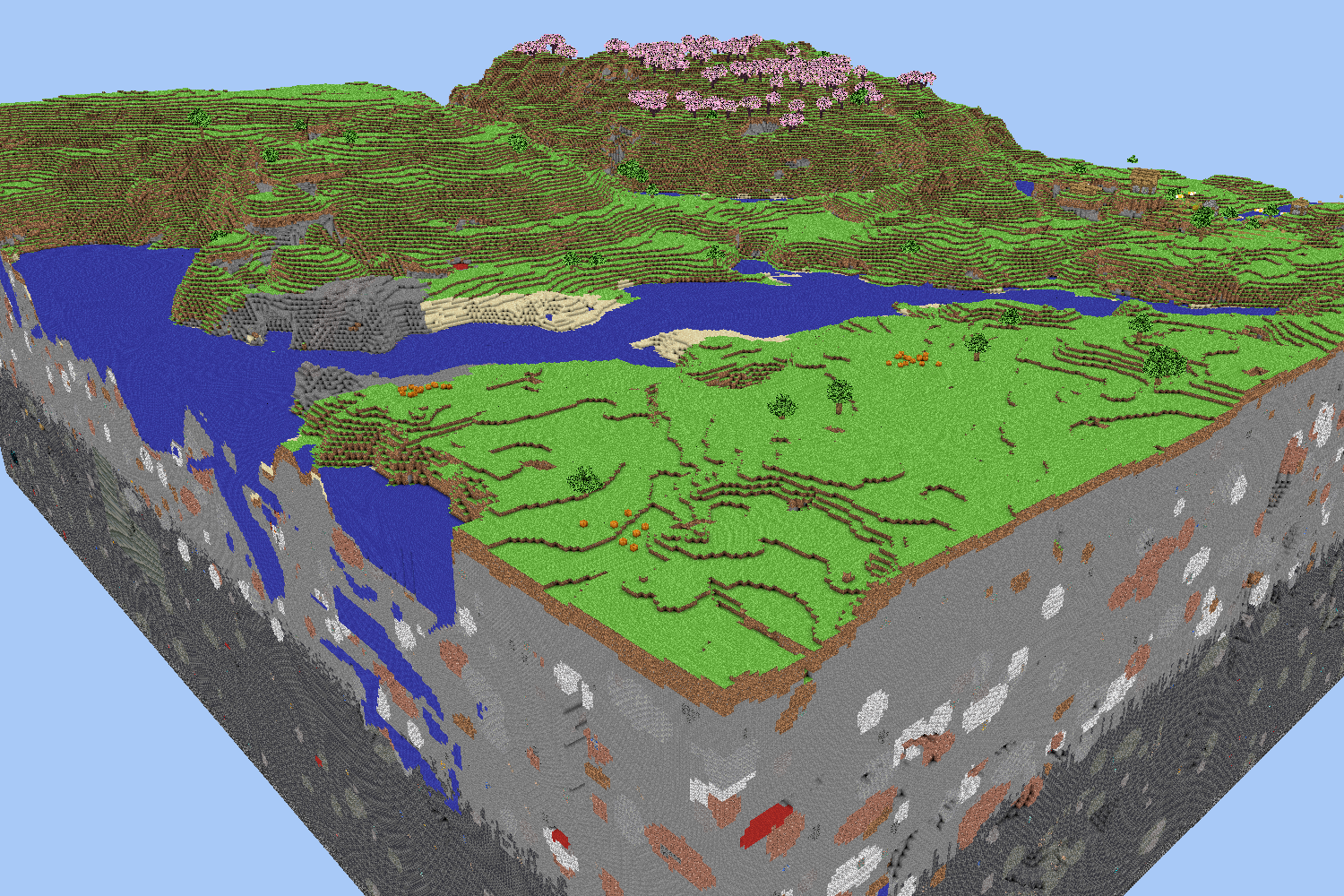
This project investigates the development of a high‑performance rasterised voxel renderer using Vulkan and C++, focusing on the implementation and analysis of key rendering optimisations. Core features include a custom binary greedy meshing algorithm capable of rapidly triangulating large voxel worlds with baked ambient occlusion, alongside a level‑of‑detail system and tools for importing Minecraft worlds and OBJ models. The renderer is able to handle significantly more opaque, unlit voxels than popular block‑based games such as Minecraft, Hytale and Vintage Story.

This project explores accessible and inclusive authentication design through a functional web-based prototype. Informed by lived experience of multiple sclerosis, the system prioritises reduced cognitive load, minimal motion, clear feedback, and privacy-preserving account recovery. The prototype demonstrates alternative approaches to login, registration, and recovery that avoid reliance on personal data such as email or SMS. By integrating accessibility features directly into core authentication flows, the project highlights how thoughtful design and technical decisions can improve usability, trust, and inclusivity for users with diverse and fluctuating access needs.
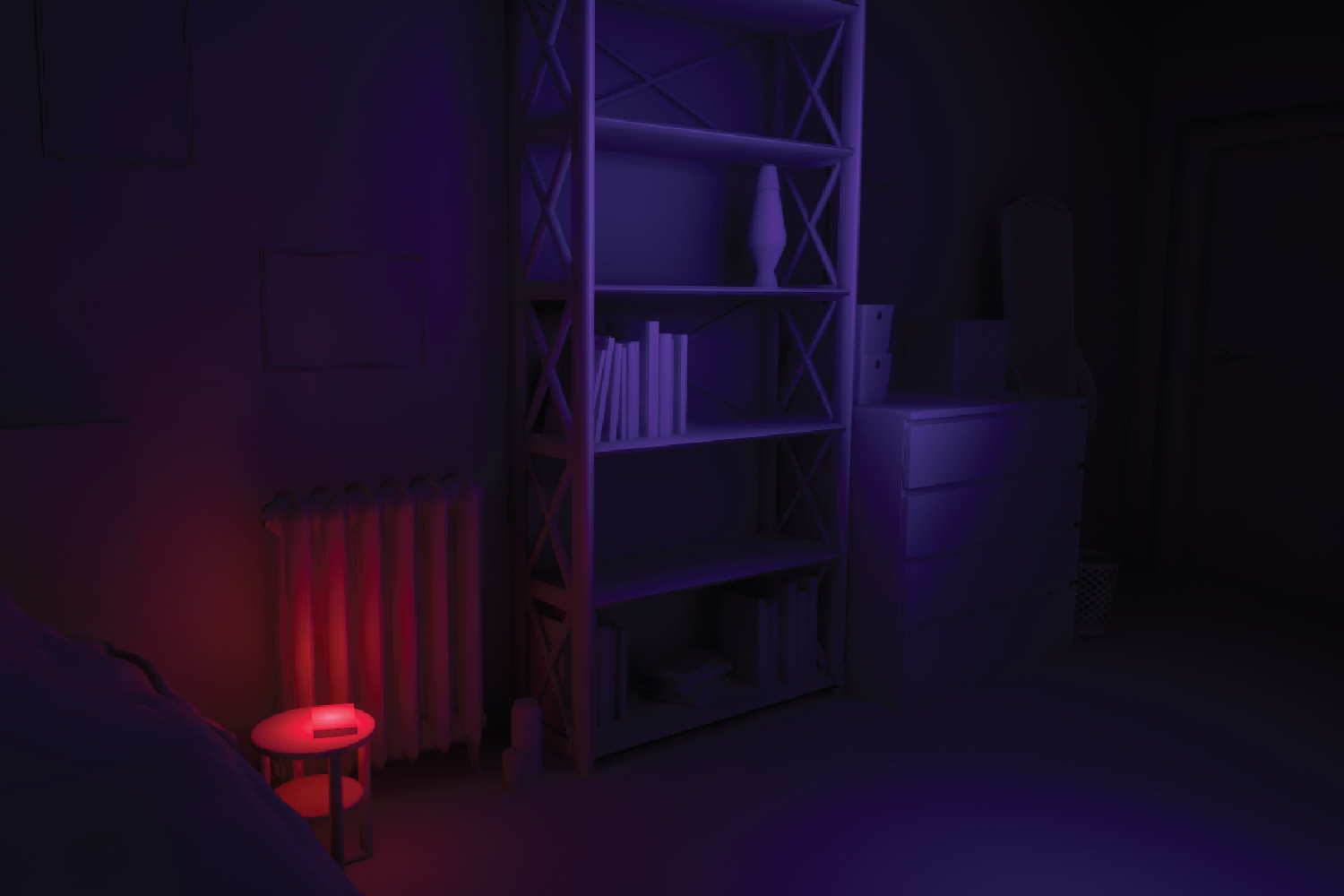
Repeat After Me: It’s Not Your Fault You’re Sick is an autobiographical walking‑simulation that explores the impact of a late Type 1 diabetes diagnosis in adulthood. Set within the developer’s own flat, the experience is guided by personal voice narration and environmental captions, reflecting on the mental and physical effects of living with a chronic condition. The project examines how lived experience and autobiography can be used to create authentic, empathetic representation for people navigating long‑term illness and related mental health challenges.
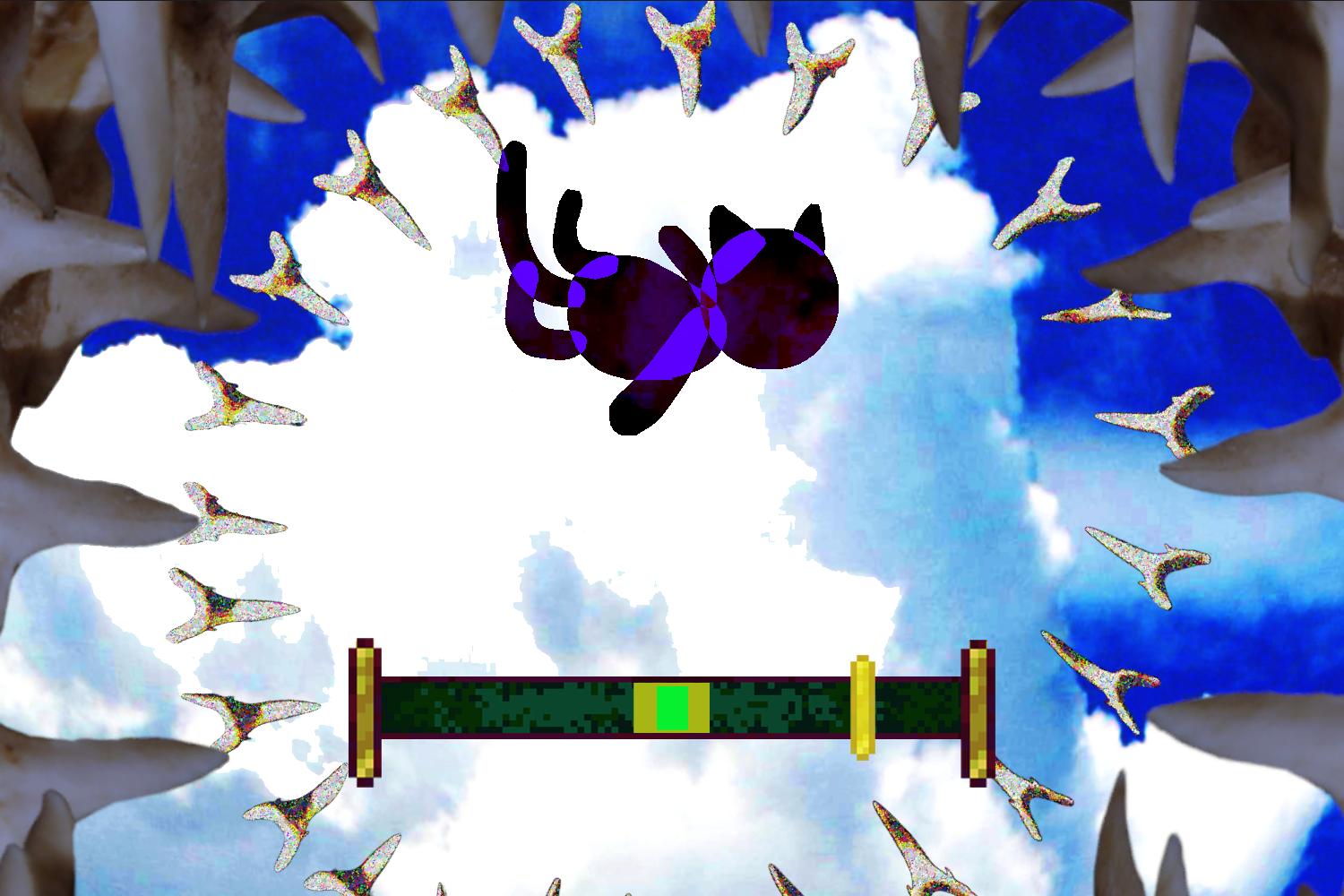
A 2D RPG in a pixelart style following the player character, a cartoon cat, the mouse on their tail that gives them advice, and their experiences with a ‘downward spiral’ of OCD (obsessive-compulsive disorder.) The player ‘fights’ and ‘flees’ from intrusive thoughts that will be visualised in 2DRPG boss fights similar to that of 'Undertale', in a style reminiscent of analogue horror. The game has areas which focus on ‘triggers’. These triggers begin fights where the player will have specific limited actions depending on the compulsion/ intrusive thought. This project showcases the effects of OCD through visual, narrative, and design choices.
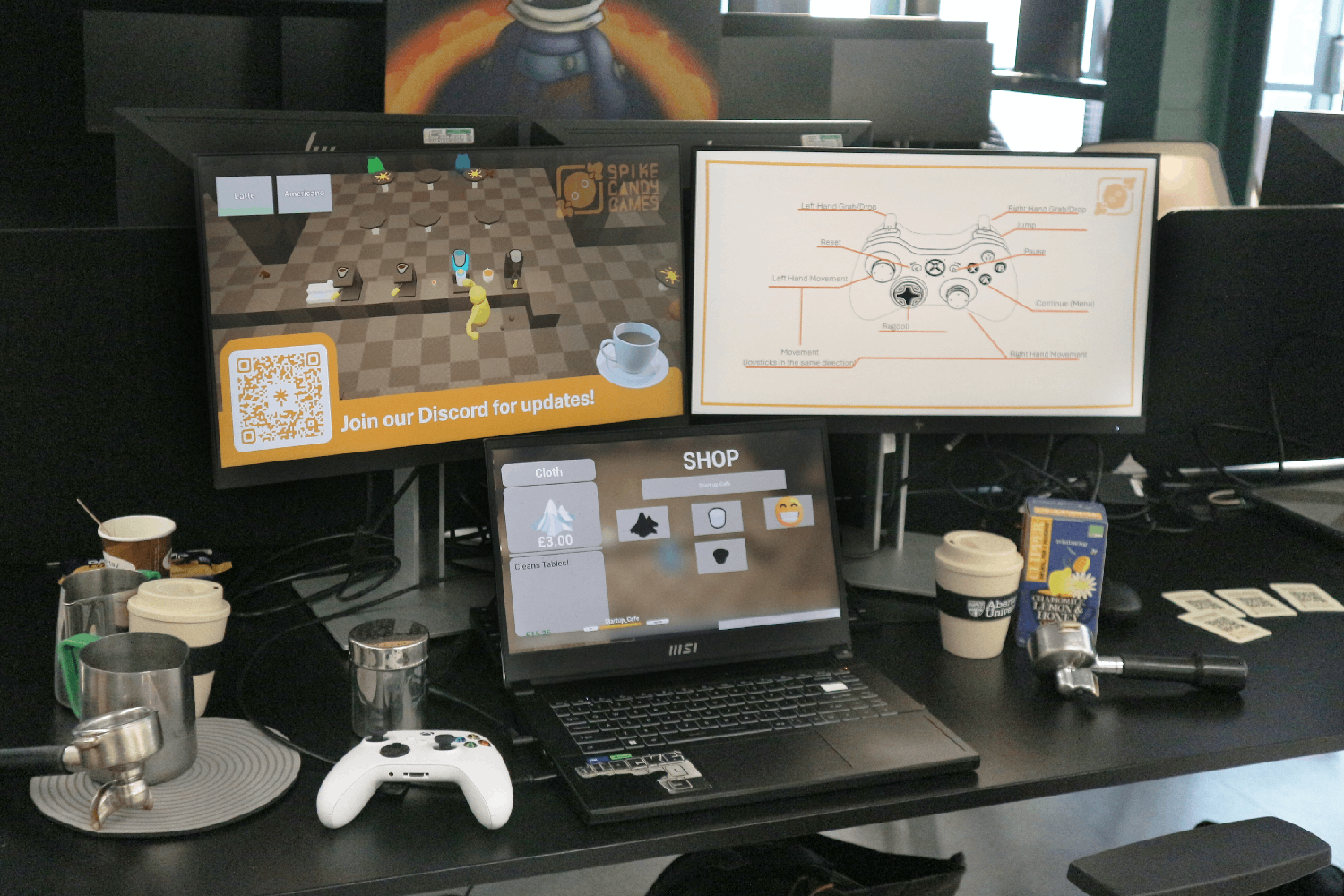
We don’t really know what a game is going to look or feel like until it's been discovered. Untitled Coffee Game explores where cafe games intersect with different genres audiences enjoy by engaging with them at events and online. Feedback is used to influence the game's next iteration, balanced with a producer's perspective, which paints an interesting project roadmap to look back upon. The game’s current state is chaotic, floppy and fast-paced; Combine ingredients into different coffee orders, earn money and unlock upgrades to your cafe.
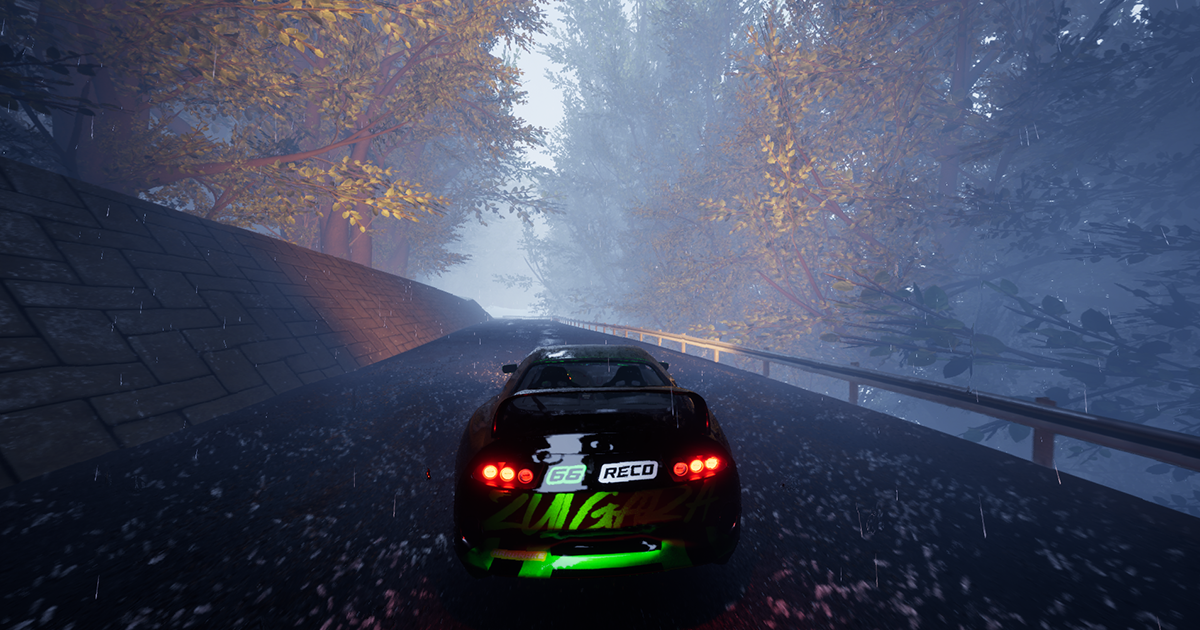
Tatakai is a wide-linear, narrative-driven, neon-noir, action prototype developed in Unreal Engine 5.6. Tatakai is set between a Touge mountain pass and the fictional city of Yamatori. The project explores architectural principles that shape immersive level design. Instead of treating environments as backdrops, Tatakai uses space actively to guide movement, decision-making and emotional pacing. Tatakai features heavy traversal through vehicular control and parkour while also offering melee combat. A combination of traversal, combat and spatial transitions helps in investigating how layout, hierarchy and environmental cues influence player experience. Tatakai serves both as a playable vertical slice and as a research into immersive level design and digital architecture.