Scholarships
The scholarship below is open to those applying from England, Wales and Northern Ireland with a 2.1 or above for a postgraduate course. It's paid in two instalments, in December and March.
Deadline for Applications - 31st May 2024
Develop your theoretical understanding, hone your practical skills and achieve a higher level of personal awareness and resilience by studying counselling at a postgraduate level. This MSc equips you with the skills you need to offer emotional support for people experiencing problems in their lives.
Join the only Masters programme in the UK to provide comprehensive training in the pluralistic framework for counselling and psychotherapy integration. This means you’ll absorb a wide range of theories and interventions, learning how best to adapt your approach to the needs of your clients.
We enjoy a rich tradition of providing training in counselling and counselling skills. Our teaching staff are highly respected leaders in their field, and you’ll be joining a vibrant community of practitioners and past and current students.
Abertay has a strong research orientation, and the Tayside Centre for Counselling (TCC) is based on campus. There are opportunities for you to be involved in projects that are influencing and developing the role and effectiveness of counselling interventions in modern society.
If you’re a Scottish student, or if you meet the residency requirements, and are planning to study this course, you could be eligible for a postgraduate loan. Find out more here.
This programme is not available to students who require a visa to study in the UK.
Frequently asked questions about our MSc Counselling.
Important Information for prospective MSc Counselling students.
The course offers a comprehensive selection of topics on talking therapies, interventions and professional practice, with core areas including:
A range of theoretical approaches to counselling, such as Person Centred and Experiential, Psychodynamic, Transactional Analysis, Existential, and Cognitive Behavioural Therapies
Personal development and self-awareness
Evidence-based practice and research methods
Ethical and professional issues in counselling
There are three exit points on this programme. These are:
End of the first year: Postgraduate Certificate in Counselling Studies
End of second year: Postgraduate Diploma in Counselling Studies
End of third year: Masters (MSc) in Counselling
From the outset you’re engaged in skills learning, as the first year of this MSc introduces you to counselling and practical training in the application of helping interventions. This foundation year provides counselling skills, and the experience you need to undertake a practice placement.
The subsequent two years involve a fascinating combination of teaching in theory, research, practice and professional issues, and self-development, all of which are designed to be directly linked to practice placement.
Additionally, you’ll have the opportunity to take part in workshops to introduce and develop your understanding of mental health issues, such as depression and anxiety, addictions, and eating disorders, along with specific approaches such as solution-focussed therapies and mindfulness.
In combination with the one day a week attendance on campus, in years two and three you’ll take a placement as a counsellor – an essential part of your professional training.
You’ll be assessed by using case-studies, theory essays, literature reviews, practice observations, and reflective accounts, along with reports from supervisors and practice placement. Assessment tasks are integrated into the course and spread through the three years.
Formative assessment is ongoing and the programme team provide feedback on practice skills and activities in class.
Provides students with core counselling skills, theoretical knowledge and opportunities for personal and professional development.
An introduction to the process of using counselling skills in practice and strategies for facilitating therapeutic change within the pluralistic framework. This module will allow students to conceptualise counselling within professional and supervisory contexts.
Provides students with a deepened and extended understanding of theoretical models of counselling to develop their capacity to use theory to facilitate change in clients.
Provides students with a supportive and critically challenging arena to reflect on and explore theoretical, ethical, professional and personal issues arising from the research and the application in practice of theory and interventions.
Provides students with essential learning in counselling theory. This module addresses key areas of practice including counselling contracts, ethical issues, personal soundness, supervision and professional skills.
An in-depth examination of the skills, concepts and professional knowledge required to use a pluralistic framework for counselling practice. It covers the framework and common interventions and approaches which are used in conjunction with it. Teaching also involves practice skills in goal collaboration, case-formulation and client process monitoring.
This module focuses on practice placement, monitoring and supervision. In addition it provides the student with an opportunity to explore critical issues around the relationship between theory, practice and research in relation to a collaborative pluralistic framework through a collaborative project.
The module allows the student to integrate theoretical and practical knowledge in order to demonstrate their effectiveness as a counsellor and begin preparation for their subsequent career.
Applicants should normally have:
An undergraduate degree (2:2 or better in any subject) which may be supplemented with professional experience and evidence of ability to study at postgraduate level
Interest in counselling as a profession or career/personal enhancement
Some experience in helping professionally or voluntarily
One reference - preferably academic, however, professional accepted if out of education for a number of years
All new entrants are required to undertake a criminal records check (PVG) at the point of entry to the programme. All applicants are interviewed as part of the selection process.

All applicants are required to provide certified proof of competence in English Language. The university's minimum requirements are:
Overseas and EU: IELTS at 7.0 (with no band less than 6.5).
If you have a counselling certificate, without a degree, your application may still be considered. We would be looking for you to have extensive experience (over five years) within a counselling setting. Interview would be at the discretion of the Programme Leader. We’d also require evidence of the ability to study at level 11 (postgraduate).
There are a number of ways that this might be demonstrated. It could be evidence of studying at level 10 (degree level), an OU course or similar, or a part-time Counselling skills course at level 9/10. We may also consider those who are employed in a graduate role, for example, a nurse who has not obtained a degree.
In some cases we may ask you to provide an essay to demonstrate evidence of critical argument and literacy skills. Often it may be a combination of achievements and experience that demonstrate this ability.
During Year 2 and Year 3. You are required to organise your own placement.
No, but you are required to have monthly private supervision. This can cost between £20-£60 per fortnight.
No, we do not require you to undertake self-therapy, but it may be helpful, and we offer a free, confidential counselling service.
As it is a professional counselling qualification, the programme is accredited with the British Association for Counselling and Psychotherapy (BACP). It is not accredited by the BPS as it is a counselling programme.
The programme is part-time and runs over three years.
The course fees you'll pay and the funding available to you depends on factors such as your nationality, location, personal circumstances and the course you are studying. Visit the links below and scroll down to find the Postgraduate section.
Find out about grants, bursaries, maintenance loans and living costs in our postgraduate taught fees and funding section.
The scholarship below is open to those applying from England, Wales and Northern Ireland with a 2.1 or above for a postgraduate course. It's paid in two instalments, in December and March.
This £1,000 award is open to all prospective new postgraduate students from England, Wales and Northern Ireland.
By providing both foundational and professional training in a single programme, this programme gives you the opportunity to undergo a three year part-time degree as a direct entry in to a counselling career.
Our graduates have moved on to work within the field of counselling, psychotherapy, social care, research and education. Some graduates choose to enter private practice, while others remain in the voluntary sector. In addition, it’s possible to go on to train in counselling supervision.
An MSc in Counselling also provides transferable skills, and can considerably enhance career prospects for people working in health, education, the church, criminal justice, human resource management, and the voluntary sector.
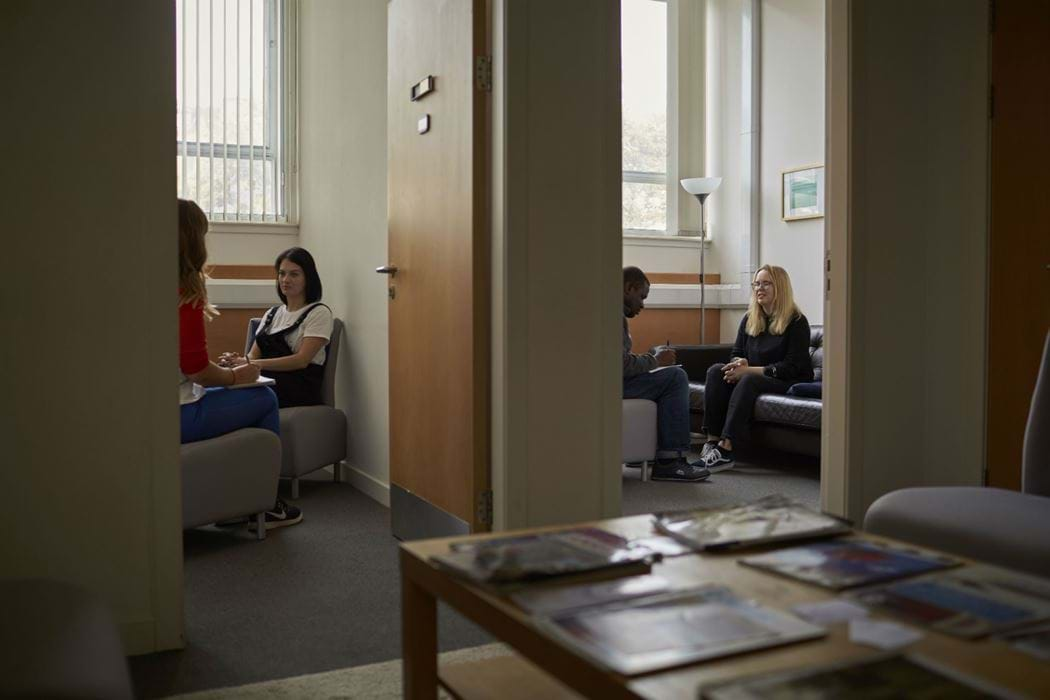
Our counselling programme has strong links with a number of counselling and social care agencies within Scotland. These relationships ensure the smooth management of student placements and professional development.
All staff are members and accredited trainers for BACP, with one currently representative at BACP governance level.
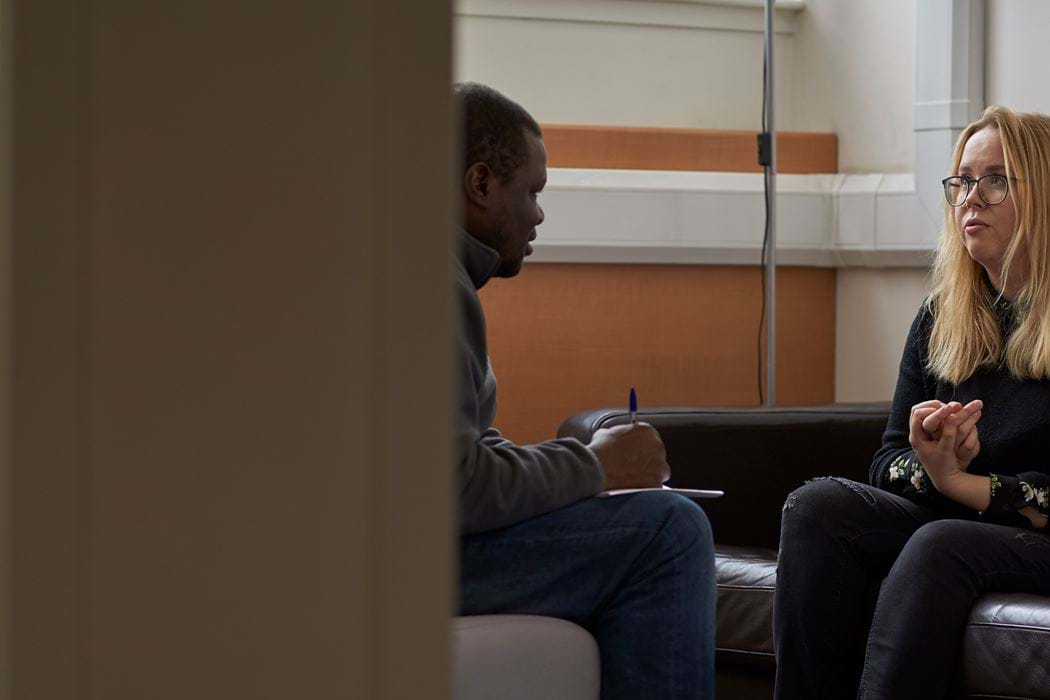
Meet some of our Counselling graduates and find out what they've gone on to do.
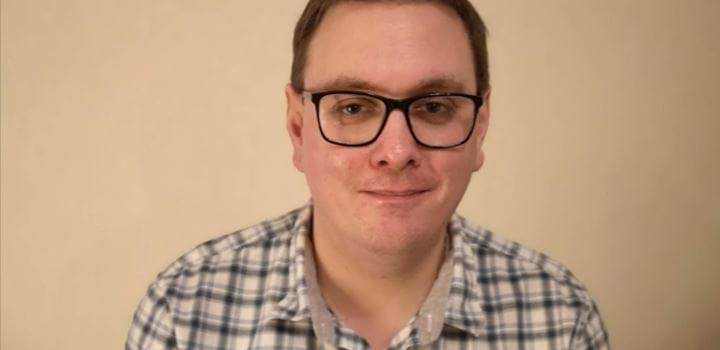
Paul founded counselling hub 'Harmony' and also works as a counsellor within Abertay's Student Services Team.

Maheen studied MSc Counselling and one day hopes to open up her own counselling practice in Pakistan.
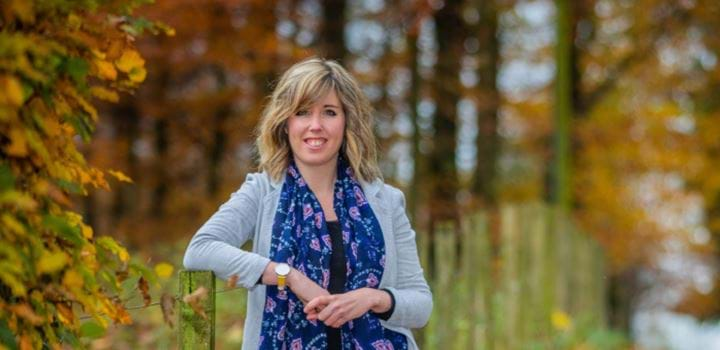
Roxanne is the Co-Founder of Cyber First Aid and Founder | CEO of the charity Trauma Healing Together.
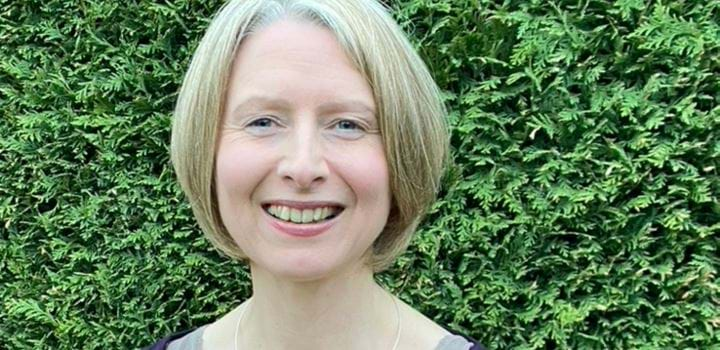
Ashleigh is Head of Counselling and Supervision at Rowan Consultancy. She is also a Private Practice Counsellor, Clinical Supervisor and Coach.
Our Graduate School is a dedicated facility providing support, training and professional development opportunities to our vibrant postgraduate community. Specially designed to promote integration and inculcation of interdisciplinary working in our next generation of researchers, postgraduates study and learn together at Abertay – from Environmental Management to Law, Psychology, Bioscience, Economics and Business, Cybersecurity and Computer Games Development.
When you join us as a postgraduate student or researcher, you’ll be joining a community of creative likeminded scholars and will automatically be provided with access to our dedicated study and social spaces – a forum in which you can meet, work and learn with other researchers and postgraduates from across the University.
You’ll benefit from training and professional development opportunities, as well as support with funding applications, placement opportunities, teaching support, public engagement and outreach activity.